
A clear arrival, without too many directions
From the entrance to the first toast, the route should feel intuitive. Before deciding where to place the welcome drink, consider where guests will arrive from, where they can leave bags or coats, and which passages must stay clear. A striking installation should not conceal an entrance or create a bottleneck.
If the venue includes several rooms, a few visible wayfinding cues and a person ready to welcome guests may be more helpful than a long list of signs. The aim is not to direct every step, but to make sure nobody feels unsure where to go.
The lounge is part of the reception
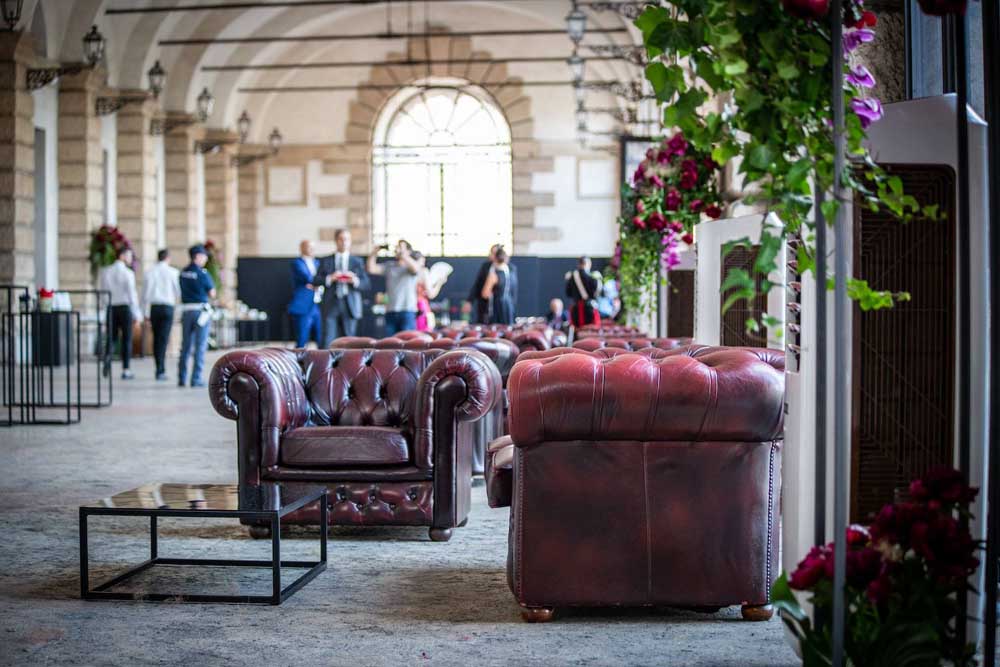
Sofas and armchairs are more than decoration. They offer a pause, encourage conversation and let guests enjoy the aperitif even if they would rather not stand for long. Their position matters as much as their style: too far from the service, they feel disconnected; too close to busy routes, they can obstruct movement.
It often works better to create small, inviting areas that remain visually connected to the rest of the event. Accessible side tables and somewhere to set down a glass make the space genuinely useful. Under a portico, the layout can highlight the architecture without taking over the full depth of the passage.
Plan the service as well as the furniture
A single, popular station can draw too many people at once. When planning the aperitif, discuss the position of drinks and food with the catering and venue teams, taking guest numbers, available space and service style into account.
There is no single layout that suits every reception. In some cases, several service points work well; in others, a central station supported by tray service is a better fit. The choice should help guests move naturally while giving the team enough room to work.
Give pauses the same care as the main moments
There are transitions, greetings and short waits between the aperitif, dinner and cake cutting. Thinking about them in advance helps the event keep a comfortable rhythm. Where will guests gather while the next moment is prepared? Will there be seats, water and suitable lighting? Will the route still feel comfortable as evening falls?
A good schedule leaves room for conversation. There is no need to fill every minute; each transition simply needs a purpose, with the service team aware of the agreed timings and priorities.
Plan an alternative that really works
For outdoor events, the wet-weather option should be considered alongside the main plan. It is not enough to know that a covered space exists: check how it will accommodate guests, furniture and service. The same care applies to hot weather, uneven routes and the needs of guests with reduced mobility.
A site visit with the venue, planner and catering team makes it possible to address these details before the event day. Practical questions do not take the poetry out of a project; they help it work.
A welcome designed together
Materials, flowers and lighting create the atmosphere. Comfortable routes, considered timings and attention to people make it welcoming. When these elements work together, the reception feels effortless to guests, even if they never see the work behind it.
Planning your next event? Tell Food & Sweet about it through the website concierge: start with the occasion, the venue and the experience you would like to offer your guests.